We Were Finally the Heroines. Then Amazon Cancelled Ride or Die
Prime Video cancelled Ride or Die after just one series. It was funny, furious, critically adored and widely watched — and it gave women in their fifties the oh so radical opportunity to be the heroes of their own story.
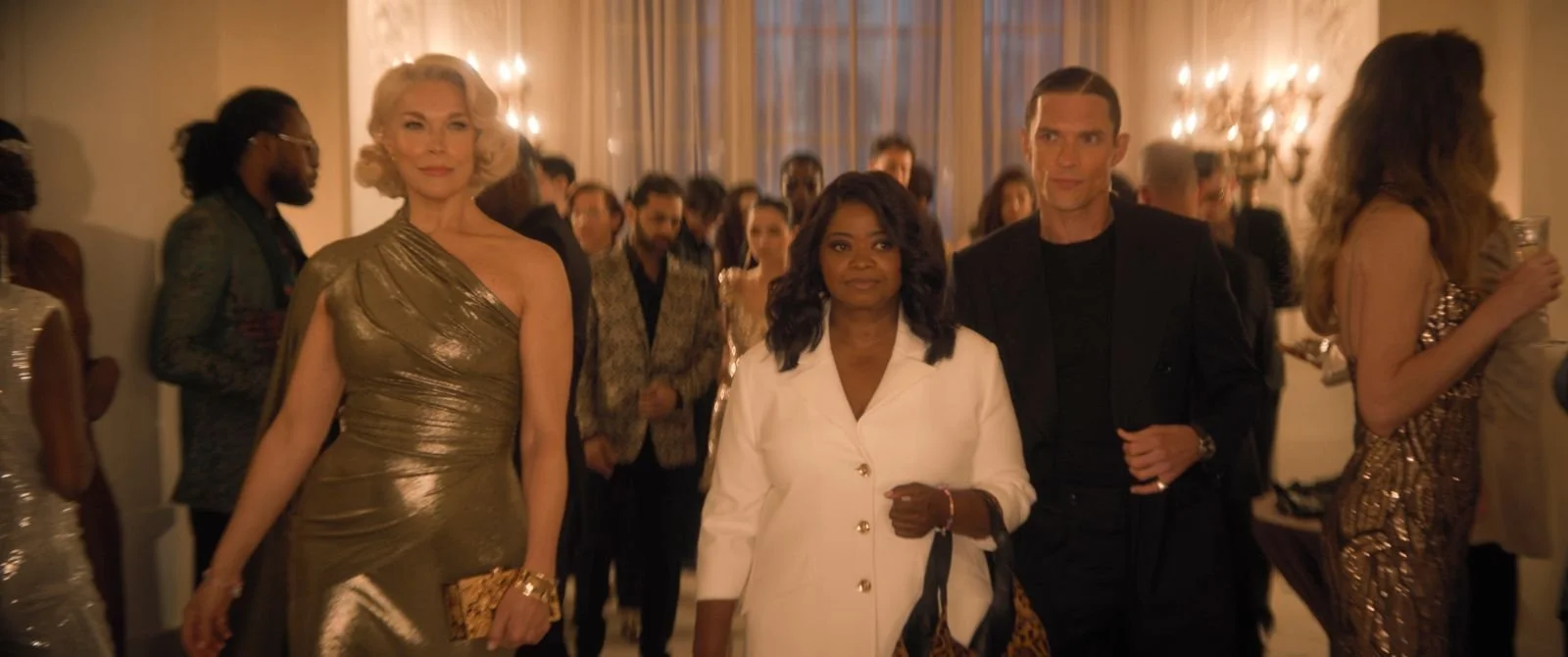
Buckle up buttercups, cause I can’t do this in 1500 words.
I have tried many times to find a measured and sensible way into this post. I promise, I tried.
Unfortunately, measured and sensible have fucked right off, I really like to think in a stolen car with Debbie and Judith, so we are going to have to work with pure rage instead.
Prime Video has cancelled Ride or Die after one series.
Cancelled it.
One of the only shows I can remember watching in which menopausal women are not the butt of every joke, the tiresome nag of a wife at home, the sexless dowdy mother of the actual hero, or a collection of hot flushes and magnesium capsules in a cardigan.
Cancelled.
A genuinely hilarious, gloriously ridiculous action comedy with warmth, wit, fabulous chemistry and enough unfinished business for several more years of international shenanigans.
Cancelled.
Now every single person I spoke to about this show — male or female, older or younger — loved it. Absolutely bloody loved it. Even Hawthorn, who is not remotely interested in handing out praise merely to be polite, adored it and will be gutted that it is not continuing. I know that it will not be everyone’s cup of tea, but it did seem to be beloved by many.
And if I can be honest? I am so bloody tired of watching stories about women like us disappear.
They were not supporting characters. They were the story
If you have not watched Ride or Die, the spoiler-light version is this: Debbie, played by the talented and elegant Octavia Spencer, discovers that her best friend Judith, played by the fucking legend that is Hannah Waddingham, has been keeping one fairly substantial secret. Judith is an international assassin. Things go spectacularly and often hilariously to hell in a handcart, and the two women end up on the run across Europe.
It is a buddy caper, an action thriller and a love story about female friendship — the kind of deep, decades-old friendship that is built from private jokes, instinctive care, shared history and knowing precisely which bits of somebody’s burger they are about to hand you, just as you pass over your tomato to them.
Most importantly to me, Debbie and Judith are not decorative additions to somebody else’s adventure. They are not mothers waiting at home while younger people do the interesting things. They are not older women wheeled in to dispense wisdom, make an embarrassing remark or die at a narratively convenient moment.
They are the adventure.
They are funny, frightened, furious, fallible, loyal, grieving and exceptionally fucking good at many things. They make dreadful decisions. They save one another. They are allowed to be glamorous, dangerous, tender, selfish, clever and absurd — sometimes all of the above before lunch.
And their age matters without becoming the only thing that matters about them.
That distinction is vanishingly rare.
The programme knows exactly how the world looks at women once we cross an invisible line into “a certain age”. It lets younger, more patronising characters underestimate them. It lets the machinery around them assume they are becoming inconvenient, irrational or obsolete. But the joke is on the people making those assumptions, never on the women themselves.
There is no patronising little pat on the head because they are still capable. No astonished applause because a woman over fifty can still be attractive, funny, athletic or interesting.
They simply are.
Specific stories are not niche stories
There is a persistent and particularly stupid belief that a story centred on women is only for women, while a story centred on men is simply a story for all.
Nobody ever seems concerned that a male-led spy caper might alienate half the population. Men have been permitted to save the world, have breakdowns, make crude jokes and drive recklessly across Europe for decades, secure in the knowledge that us mere women will somehow manage to follow the plot despite the protagonists not resembling us.
Yet give us two women in their fifties at the centre of the chaos and suddenly the calculators come out. Is the audience broad enough? Is it young enough? Is it commercially useful enough?
Well, my entirely unscientific sample included women and men, children and adults, and every one of them thought Ride or Die was brilliant. Hawthorn did not enjoy it because it represented a ten-year-old boy. He enjoyed it because it was funny, exciting and oh so very fucking good (that’s a direct quote folks).
Representation gives the people on screen the joy of being seen. It does not stop anybody else from seeing them.
Good stories travel.
This was not a worthy little show nobody watched
Perhaps the cancellation would be easier to understand if Ride or Die had quietly sunk without trace.
It did not. Brace yourselves for the dry boring bits.
All eight episodes arrived on Wednesday 15 July. According to viewing data reported after the cancellation, Luminate recorded 927,000 US views in the first two days alone.
Then came the Nielsen figures.
In its first reporting window — five days, from its Wednesday release to the end of Sunday — Ride or Die amassed 869 million viewing minutes in the US. That put it at number eight across every programme on every measured streaming service, and number three among streaming originals.
In week two, it did not collapse after the curious had taken a look. It grew. Viewing rose to 922 million minutes, lifting the series to number four across all streaming and number two among originals.
In week three, it delivered another 786 million minutes, a fall of only 15% — noted at the time as strong retention for a binge-released series. In week four it was still in Nielsen’s top five streaming originals, with 506 million minutes watched. Altogether, it spent five consecutive weeks in Nielsen’s US top ten originals.
Nor was this purely an American blip. Trade reporting says Ride or Die was Prime Video’s number-one original series globally for its first three weeks. Measured over its first fourteen days, it was reportedly Prime Video’s most-watched new scripted series in the US among those launched during the previous twelve months.
At the time of writing, it also has a 96% critics’ score and an 85% audience score on Rotten Tomatoes.
It was watched. It was enjoyed. It was recommended. It had room to grow and a story with plenty of road left in it.
Prime Video has not publicly explained its decision, and streaming economics are deliberately murky. Ok, perhaps there were costs, contracts or completion-rate calculations we cannot see. But the publicly visible evidence does not describe a programme limping along on the goodwill of a few folks.
It describes a hit.
And barely two months after its debut, it was done.
Now compare it with the boys
The clearest comparison is not with some obscure series from years ago. It is with another Prime Video programme released just four months earlier: Young Sherlock.
Both are eight-episode action-adventures. Both released their entire first series on a Wednesday. Both therefore had the same five-day opening window in Nielsen’s weekly US figures.
Young Sherlock, centred on Hero Fiennes Tiffin’s teenage Sherlock Holmes and produced in Guy Ritchie’s unmistakably male-heavy action style, recorded 678 million viewing minutes in that opening window.
Ride or Die recorded 869 million.
That is 191 million additional minutes — an opening 28% higher than Young Sherlock .
Young Sherlock premiered on 4 March and was renewed on 14 April, just under six weeks later. Its second series is already in production.
Ride or Die premiered on 15 July and was cancelled on 19 September, a little over nine weeks later.
The critical comparison does not explain it either. Young Sherlock currently has 84% from critics and 83% from audiences. Those are perfectly respectable scores. But Ride or Die sits at 96% and 85%.
Now, because numbers should not be forced to wear pointy hats and perform tricks for our argument, even though that would make them more entertaining, there is an important caveat. Amazon says Young Sherlock reached 45 million viewers globally in its first 28 days and ranks among its ten biggest original seasons. Amazon has not released an equivalent 28-day worldwide figure for Ride or Die. We do not know the two budgets, completion rates, subscriber recruitment numbers or contractual calculations. The Nielsen figures measure US television-set viewing, not every viewer on every device around the world.
So this is not proof that the two programmes were commercially identical, or that sexism was written in red ink across a cancellation spreadsheet.
It does, however, make it pretty fucking difficult to argue that Ride or Die simply failed to find an audience. In the nearest public, like-for-like measurement we possess, the women’s programme opened substantially higher — and continued to hold its audience — while the male-centred programme was swiftly given another series.
Then take a wee look at the wider investment.
The Terminal List, built around Chris Pratt’s Navy SEAL, opened with 1.1 billion Nielsen minutes in 2022 and climbed to 1.6 billion the following week. It was a larger launch than Ride or Die, and pretending otherwise would be silly. It also received a bruising 42% critics’ score. Amazon looked at that male-led action audience and saw a franchise: a second series arrives in October, and it has already received the seven-part prequel Dark Wolf.
Reacher is an even bigger beast. Its first series generated more than 1.5 billion minutes in its first full week, and the later series have remained enormous. It is now four series deep, a fifth was commissioned before the fourth even aired, and the Reacher universe has expanded into a spin-off. That success deserves it’s continuation; this is not an argument for cancelling programmes people love in the name of some grim equality of disappointment.
It is an argument about what Amazon appears able to imagine after success.
When a male-led action series lands, Amazon sees a second series, a long-running franchise, a prequel, a spin-off and an entire universe waiting to be built.
When two women in their fifties deliver hundreds of millions of viewing minutes, five weeks in the charts, global number-one status and near-unanimous critical praise, Amazon apparently sees the end of the road.
Men are permitted to become intellectual property.
Women are treated like a a now moulding seasonal experiment.
Amazon, of all companies, has the receipts
Which brings me to the alleged commercial mystery of “women of a certain age”.
If there is just one company on this earth that cannot possibly pretend not to understand our buying power, it is Amazon.
Amazon knows.
It knows about the emergency birthday supplies, the endless magnesium or other weird supplements we are willing to try to alleviate the heinous symptoms of menopause, the books, the dog treats, the fabric shears and the wildly optimistic craft purchase made at 1.17am because sleep has once again declined to accept our invitation. It knows exactly what women in midlife buy, how often we buy it and which other members of the household we are buying it for.
Amazon has the receipts. Quite literally.
Research from Boston Consulting Group found that people aged 50–70 account for around 40% of spending in the UK across the nine categories it studied. It also found that mature consumers can influence younger consumers, value quality and often reward brands with long-term loyalty.
NOON’s research into more than 2,000 ABC1 British women aged 45–60 described a cohort with £92 billion in spending power. Forty-one per cent said they did not feel represented by wider society, while 54% said they were more likely to buy from brands that did represent them.
And in 2025, Advertising Standards Authority research found that 44% of UK adults thought older people were underrepresented or entirely absent from advertising (no shit Sherlock...pun absolutely intended). Nearly half believed humour at older people’s expense was likely to cause offence.
We are not a tiny niche tucked somewhere between stairlifts and anti-wrinkle cream. We are viewers, subscribers, customers, workers, parents, carers and we are absolutely recommenders. We pay for streaming services. We choose what families watch. We tell our friends when something is worth their time.
To be very, very fucking clear, women should not have to demonstrate enormous spending power before we are judged worthy of stories. Our humanity is not conditional upon our disposable income.
But if money is the only language the people making these decisions understand, the numbers are hardly whispering in a corner, scared to raise a hand.
We are done being the joke
“Women of a certain age” is itself a peculiar phrase. Certain of what, exactly?
Certain that we have had enough?
Certain that invisibility is not the same thing as irrelevance?
Certain that our lives did not end when our faces changed, our children grew, our hormones rioted or somebody stopped considering us the preferred demographic?
For years, midlife women on screen have been permitted to exist within a miserably narrow set of boundaries. We can be someone’s mum. Someone’s wife. Someone’s embarrassing boss. We can be tragically abandoned, nobly suffering or hilariously hormonal. If we are allowed power, it is too often because we are cold, lonely and vaguely monstrous. If menopause appears at all, it becomes either the entire plot or the punchline.
Ride or Die did something both rare and ridiculously simple: it allowed women in their fifties to contain multitudes.
Their friendship was not a side dish to the important romance. It was the beating heart of the story. Their experience did not make them dull; it made them formidable. Fifty was not an expiry date. It was the beginning of the bloody adventure.
And perhaps that is why, for me at least, this cancellation has landed as more than ordinary television disappointment.
It feels like being shown a door, walking through it in our millions, and then being told the room was never meant for us after all.
Somebody else, pick up the phone
There is one small, tiny scrap of hope: Paramount Television Studios is reportedly shopping Ride or Die to other platforms.
Good.
Somebody with sense should take it.
Not as an act of charity towards poor, neglected older women. Not because representation is a worthy box to tick. Pick it up because it is funny. Pick it up because Octavia Spencer and Hannah Waddingham are wonderfully, gloriously fucking magnificent together. Pick it up because audiences watched it, critics loved it, the premise has miles left to run and there are far too few joyful, unruly stories about female friendship at any age.
In the meantime, watch it. Recommend it. Talk about it. Make enough damn noise that every platform being offered the series understands there is an eager audience waiting.
Because we were here, Amazon.
We watched. We laughed. We loved these women. We brought our partners, our friends and our children along for the ride.
And you cancelled it anyway.
Women of a certain age are done being invisible. We are done being grateful for scraps, and we are absolutely done being the fucking joke.
Underestimate us if you like.
But as Judith’s employers discovered, that can be a very dangerous game.
